
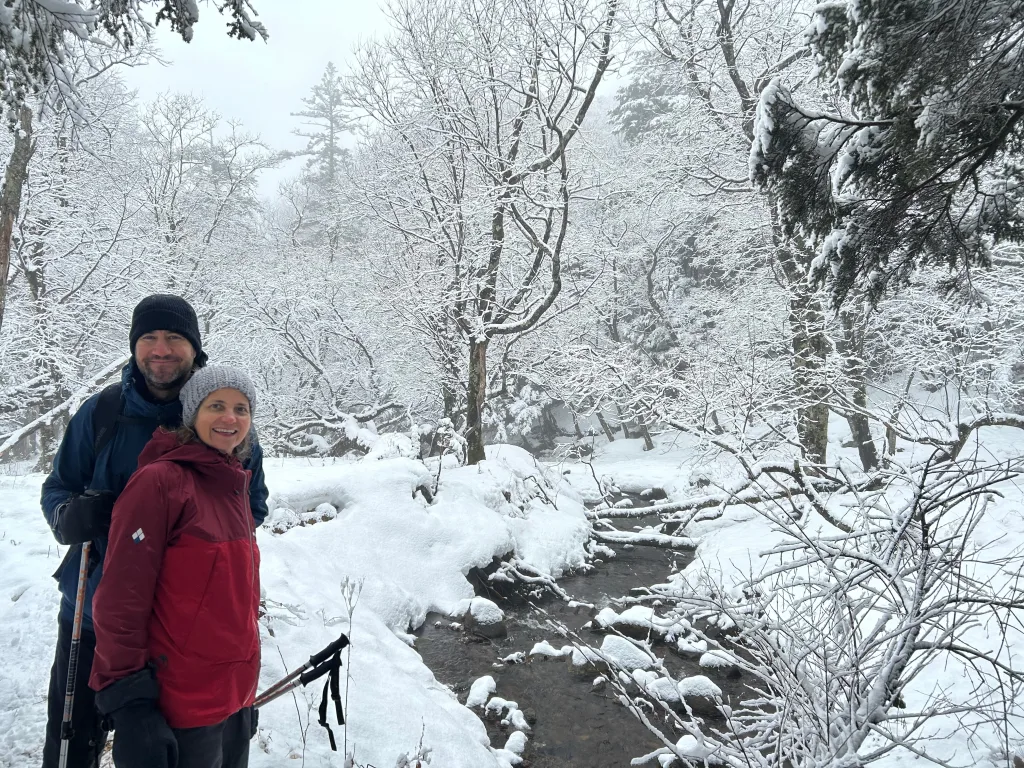
Nikko is quiet and beautiful in winter. The crowds of autumn are gone, the highland area of Oku-Nikko is covered in snow, and the shrines of Nikko town look different under a light dusting of white. This guide explains where to find snow, what to do, what to wear and how to get around in Nikko from December to March.
Where to find snow in Nikko
Nikko has two very different areas in winter. Oku-Nikko, above the Irohazaka winding road, sits at about 1,300–1,500 meters around Lake Chuzenji, Senjogahara Marshland and Yumoto Onsen. Snow usually covers this area from December to March, and it is often below freezing all day in January and February.
Nikko town, where Toshogu Shrine and the World Heritage temples are, is much lower. It gets some snow, but roads and paths are usually clear, so it is easy to visit even in mid-winter.
Things to do in Nikko in winter
1. Walk across the snowy Senjogahara Marshland
In summer Senjogahara is a green wetland. In winter it becomes a wide, silent field of snow with Mt. Nantai behind it. You can look for animal tracks, winter birds and frost-covered trees along the way. Walking on snow is easier with a guide and the right gear — our Private Winter Hiking Tour includes winter boots and traction devices.
2. See the waterfalls in the snow

Kegon Falls, Ryuzu Falls and Yudaki Falls are all in Oku-Nikko, and in winter they are surrounded by snow and quiet forest. Check the weather before you go, and take care on icy paths around the viewpoints.
3. Warm up at Yumoto Onsen
Yumoto Onsen, at the far end of Oku-Nikko, is a small hot spring village beside Lake Yunoko. After a cold day outside, a soak in the milky sulfur hot springs is one of the best parts of a winter trip to Nikko.
4. Visit the shrines and temples in the snow
Toshogu Shrine, Rinnoji Temple and Futarasan Shrine are open all year. On a snowy morning the colorful buildings and tall cedar trees are especially photogenic, and there are far fewer visitors than in autumn.
5. Go cycling in the lower Nikko area
The highland roads of Oku-Nikko are too icy for cycling in winter, so our Oku-Nikko e-bike tours run from April to November. In the lower Nikko area, the Nikko Outdoor Matcha Cycling Tour runs all year, with countryside roads and an outdoor matcha experience.
What to wear in Nikko in winter
- Warm layers: a base layer, a fleece or down jacket, and a windproof outer layer
- Gloves, a warm hat and a neck warmer — Oku-Nikko is often below freezing
- Waterproof shoes with good grip for icy paths in town
- Sunglasses on bright days, because snow reflects a lot of light
On the Private Winter Hiking Tour, winter boots, traction devices and trekking poles are provided.
Getting around Nikko in winter
If you drive to Oku-Nikko in winter, studless winter tires are essential. The Irohazaka road and the highland roads are often snowy or icy. On our private winter tours, your guide picks you up and drops you off at Tobu-Nikko Station, JR Nikko Station or your hotel in Nikko.
Winter tours with NIKKO CYCLING Ciel
Private Winter Hiking Tour in Nikko — a 5-hour private walk through snowy Senjogahara with hot drinks, snacks and lunch. December to March, for up to 4 guests. JPY 40,000 per group for 1–2 guests, 48,000 for 3 and 56,000 for 4. Pickup in Nikko included.
Nikko Outdoor Matcha Cycling Tour — a 4-hour e-bike tour in the lower Nikko area with an outdoor matcha experience. Runs all year, JPY 14,000 per person.
FAQ
Is there snow in Nikko in winter?
Yes, but mostly in Oku-Nikko, the highland area around Lake Chuzenji and Senjogahara (about 1,300–1,500 m). Snow usually stays there from December to March. The World Heritage shrine area in Nikko town gets much less snow.
Can I go cycling in Nikko in winter?
Our Oku-Nikko e-bike tours run from April to November, because the highland roads are icy in winter. The Nikko Outdoor Matcha Cycling Tour in the lower Nikko area runs all year.
Do I need snow boots for the winter hiking tour?
No. Winter boots and traction devices are included in the Private Winter Hiking Tour. Bring warm layers, gloves and a hat.
When is the best time to see snow in Oku-Nikko?
January and February usually have the most snow and the coldest days. December and March can be beautiful too, but snow conditions vary from year to year.